
For Small Businesses in Washington DC, Maryland & Virginia
Data has become one of the most powerful tools in today’s workplace. For small businesses in Washington DC, Maryland, and Virginia, HR metrics are no longer optional—they’re essential. With tighter labor markets, evolving local labor laws, and competition for top talent, companies need clear visibility into how their people and processes are performing.
But not all HR metrics are created equal. The numbers that truly matter are the ones that help you understand your workforce, spot problems early, and make smarter decisions.
Why HR Metrics Matter More Today
Many small businesses rely on basic HR reporting—headcount, attendance, PTO balances, payroll totals. These numbers are useful, but they don’t help you understand the health of your workforce.
High-impact HR metrics do.
The right metrics reveal trends in engagement, performance, recruitment, and culture. They show why people are leaving, how well new hires are integrating, whether managers are effective, and whether your processes are supporting or slowing down your growth.
In a region as highly regulated as DC, Maryland, and Virginia, metrics also help businesses stay compliant by providing visibility into trends before they turn into costly issues.
The HR Metrics That Truly Drive Performance
Let’s break down the HR metrics that give small businesses the most value:
Turnover Rate
Turnover is one of the clearest signals of what’s happening inside your culture. High turnover may indicate issues with onboarding, management, workload, unclear expectations, or even burnout. Tracking voluntary vs. involuntary turnover also helps you understand what’s driving the exits.
Time-to-Fill
A long hiring process doesn’t just slow you down—it drains productivity and can cost thousands in delays. If roles in your DMV-area business stay open for too long, it may signal bottlenecks in job descriptions, approvals, or candidate sourcing.
Employee Net Promoter Score (eNPS)
This simple score tells you how likely employees are to recommend your workplace to others. It’s one of the strongest indicators of morale, trust, and long-term retention. In competitive hiring markets like Washington DC and Northern Virginia, a low eNPS is a red flag you can’t ignore.
Training & Development Metrics
Metrics like training hours per employee or participation in learning programs show how well your team is growing. Employees who feel supported and skilled stay longer, perform better, and help build a stronger culture.
Making HR Data Easy to Understand
Visualizing HR data makes it easier to understand and act on. Below is a sample chart comparing some core HR metrics. This simple format helps leaders see patterns quickly and identify which areas need improvement:
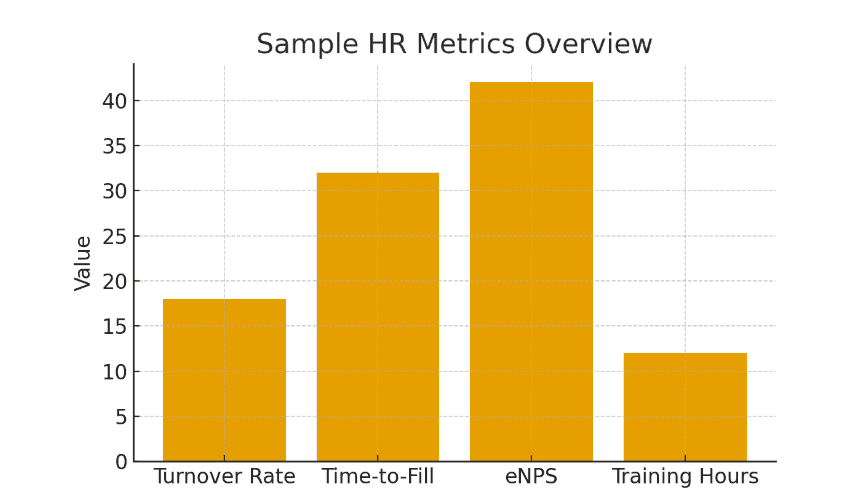
Even basic dashboards can help you spot issues early—before they escalate into turnover spikes, performance dips, or compliance risks.
How Small Businesses Benefit from Tracking HR Metrics
When small businesses in DC, Maryland, and Virginia use the right metrics, three major shifts happen:
- Problems are caught earlier.
Instead of reacting to issues after they explode, leaders can spot warning signs in engagement, hiring, or productivity. - Decisions become clearer and more confident.
Metrics validate your instincts and support smarter planning. - Performance improves across the organization.
When HR data shapes decisions, culture strengthens, retention rises, and workflows become smoother.
HR metrics transform HR from “administrative” to “strategic”—and that’s what small businesses need to scale sustainably.
Data Only Matters If You Act on It
Collecting metrics is the easy part. The real value comes from interpreting the data and taking action.
If turnover is high, what’s the root cause?
If time-to-fill is slow, where’s the breakdown?
If eNPS drops, what’s affecting morale?
Metrics should guide improvements—whether that means investing in training, strengthening onboarding, updating job descriptions, or improving communication between managers and employees.
When data becomes a driver of decision-making, HR evolves from guesswork to strategy.
Final Thoughts: HR Metrics Are Your Secret Advantage
For small businesses in Washington DC, Maryland, and Virginia, HR metrics are more than numbers—they’re your strategic advantage. They reveal what’s working, what’s hurting your business, and where your biggest opportunities lie.
When you track the right metrics, you’re not just managing people—you’re building a stronger, smarter, more resilient organization.
Ready to Track the HR Metrics That Actually Matter?
If you want help building dashboards, interpreting HR data, or turning insights into real improvements, CWC HR Consulting is here to support you.
We help small businesses across DC, Maryland, and Virginia make smarter decisions, strengthen employee performance, and build healthier workplaces.
👉 Let’s build an HR strategy powered by the right metrics. Visit cwchr.com today.